June 25, 2026 · The MailTrigger Team
Cold Email for Small Business: Market Your Business in 2026
Cold Email for Small Business: How to Win Customers on a Budget
Cold email for small business is the closest thing there is to a free, scalable sales channel. You don't need an ad budget, a content team, or a marketing agency. You need a clean list of the right people, a short message that respects their time, and a follow-up or two. Done right, it puts your offer directly in front of a decision-maker for pennies — which is exactly what a cash-strapped small business needs.
This guide keeps it practical: why cold email beats paid ads when money is tight, whether it's legal (in plain English), how to build a clean list without buying garbage, a simple SMB email formula, how to follow up without being annoying, and how to stay out of spam on a tiny budget.
Why cold email beats paid ads for cash-strapped SMBs
Paid ads have a brutal property for small businesses: you pay whether or not anyone buys, and the moment you stop paying, the leads stop. Cold email is the opposite. The cost per contact is effectively zero, and a single warm reply can cover a month of effort.
It's also direct. An ad hopes the right person scrolls past it; a cold email lands in the inbox of the exact person you chose. For a local services business, a B2B supplier, or a freelancer, that targeting is worth more than reach.
The honest caveat: cold email is work, not a magic button. Reply rates run around 1–5% for B2B outreach in 2025, so it's a volume-and-consistency game. But it's volume you control with your own time rather than your wallet.
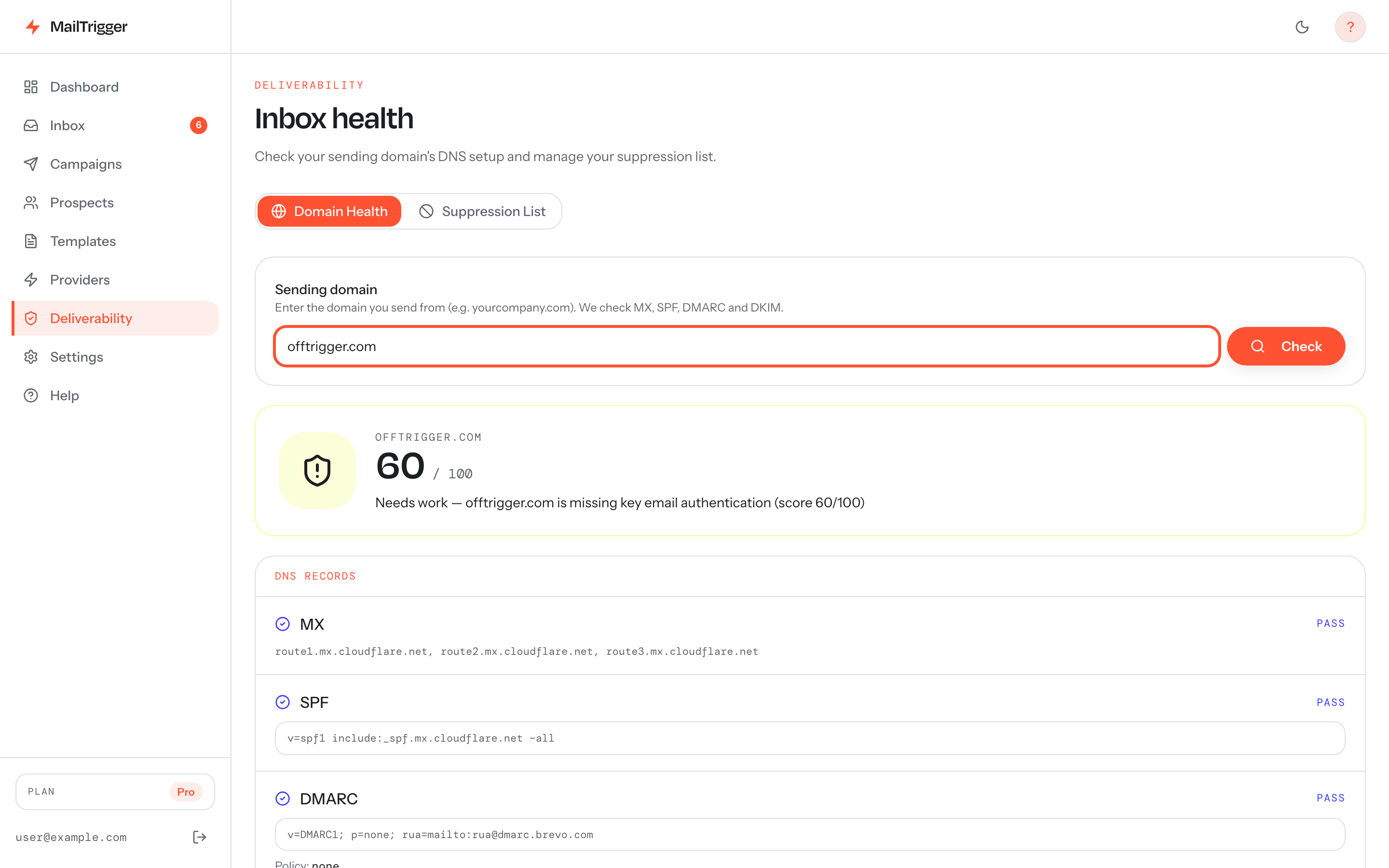
Before any small business sends cold email, authentication is step zero — Gmail and Yahoo now filter mail that fails SPF, DKIM, or DMARC, so a passing check is what gets you to the inbox.
Is cold email legal? (CAN-SPAM and GDPR in plain English)
Yes — cold email is legal in most places when you follow a few rules. The fear-mongering you'll read online usually conflates "cold email" with "spam." They're different.
In the U.S. (CAN-SPAM), you must:
- Use honest "From," "Reply-To," and subject lines — no tricks.
- Include a valid physical mailing address.
- Provide a clear, working way to opt out, and honor it within 10 business days.
- Identify the message as a solicitation where relevant.
In the EU/UK (GDPR/PECR), it's stricter:
- You generally need a "legitimate interest" basis to email a business contact, and you must make opt-out easy.
- Emailing individuals (B2C) typically requires consent.
The simple safe rule everywhere: only email people or businesses you have a genuine, relevant reason to contact, never use a list you bought from a sketchy vendor, and make unsubscribing one click. Compliance and deliverability point the same direction — respect the recipient.
Building a clean list without buying garbage
The fastest way to kill a small business cold email effort is a dirty, purchased list. High bounces and spam complaints get your domain flagged within days. Build the list yourself instead:
- Define exactly who you serve. "Dental practices within 30 miles" or "Shopify stores doing handmade goods." Specific beats broad.
- Source by hand or with a reputable tool. Local directories, association member lists, LinkedIn, or a verified data provider. Quality over quantity — 80 right contacts beat 5,000 random ones.
- Verify every address. Run the list through an email verifier before you send. Even a 5% bounce rate signals trouble to mailbox providers.
- Keep custom fields. First name, company, and one personalization detail (city, niche, recent news) so each email can feel one-to-one.
The SMB cold email formula
Small business cold emails should be shorter than you think. Here's the shape:
Subject: {{city}} {{their_industry}} — quick idea
Hi {{first_name}},
Saw {{company}} does {{specific_thing}} — most {{their_industry}} owners I talk to are slammed and lose track of {{relevant_pain}}.
I help {{their_industry}} businesses in {{city}} with {{your_one_thing}}. Recently helped {{example}} {{result}}.
Open to a quick call this week?
{{sender_name}}
The formula in three beats:
- Short, relevant subject. Localized or niche-specific. No clickbait.
- A first line about them. Reference something true about their business — this is what earns the read.
- One ask. A single, easy yes. Don't pile on questions or links.
Keep it under 90 words. Use fallbacks like {{first_name | there}} so a missing field never breaks the greeting.
Follow up without being annoying
Most replies don't come from the first email — they come from the follow-up. But there's a line between persistent and pestering. A simple 2–3 step cadence works:
- Email 1 (Day 0): the pitch above.
- Email 2 (Day 3–4): a new angle or a quick proof point — not "just bumping this."
- Email 3 (Day 8–10): a short, polite breakup — "I'll stop reaching out, but if {{pain}} is on your radar this quarter, happy to help."
Each touch should add something. The breakup email, surprisingly, often gets the most replies because it creates a gentle deadline. Always honor an opt-out instantly and stop the sequence the moment someone replies.
Avoiding spam on a tiny budget
You don't need to spend money to land in the inbox — you need to do the basics right:
- Authenticate your domain. SPF, DKIM, and DMARC are now required by Gmail and Yahoo for bulk senders. Our SPF, DKIM and DMARC setup guide walks through each record. This step is free and non-negotiable.
- Ramp slowly. A new domain shouldn't fire 100 emails on day one. See how many cold emails you can safely send per day for a safe ramp.
- Pace your sends. Spread emails across the day instead of blasting them in one burst.
- Watch your bounce and complaint rates. Keep complaints well under 0.30%. One bad list can blacklist your domain.
The complete checklist is in our cold email deliverability guide.
Cost-effective tooling: BYOK and flat pricing
Here's where small businesses get squeezed: most cold email tools charge per email or per inbox, so the better outreach works, the more you pay. That's the wrong model for a tight budget.
MailTrigger is built for exactly this situation. You bring your own key — connect a free or cheap email provider you already have (Brevo, SendGrid, Resend, SES, Mailgun, Postmark, MailerSend, or plain SMTP) — and send under your own reputation. Pricing is flat and billed by contacts, not per email: free for 250 contacts, $9/month for up to 5,000, and $49/month for up to 50,000, with unlimited sends on every plan. You get sequences with humanized delays, daily caps, open and click tracking, and IMAP reply detection so replies land in one place.
If you want to start at literally $0 by stacking free provider tiers first, read how to send 1,000+ cold emails for free — it pairs perfectly with the BYOK model. When you're ready, the pricing tiers scale with you, not against you.
FAQ
How many cold emails should a small business send per day?
Start small — 20–40 a day from a new domain — and ramp over a few weeks as your sender reputation builds. Once warmed, a single inbox can comfortably handle a modest daily volume of genuinely targeted mail. The point isn't raw volume; it's consistency with clean lists. See our per-day sending guide for the safe ramp.
Should I use a separate domain for cold email?
Yes, ideally. Send cold outreach from a separate lookalike domain (e.g. try-yourbiz.com) rather than your primary domain. If anything goes wrong with reputation, your main domain — which handles your real business email — stays clean.
What's a good reply rate for small business cold email?
Around 1–5% is normal for B2B cold email, with the best campaigns hitting 7%+. For a small business, even a 2–3% reply rate on a tightly targeted list can fill your pipeline. Judge success by booked conversations, not opens.
What are free ways to start cold emailing?
Use a provider's free tier (Brevo offers roughly 300 sends a day free, for example), authenticate your domain (free), build the list yourself, and use a free-tier sending tool. Our guide to sending bulk emails for free shows how to stack free provider tiers to reach real volume at $0.